
When Giving Directions Becomes an Invisible Operational Burden

In large venues, giving directions is often treated as a small, routine interaction. A visitor asks where to go. A staff member points the way. The moment passes quickly.
But when this happens dozens or even hundreds of times a day, it stops being a minor task. It becomes an invisible operational burden.
This is a common issue across hospitals, airports, malls, campuses, and public facilities. Staff at reception desks, information counters, security points, concierge stations, and service areas are repeatedly interrupted to answer the same navigation questions. Where is the clinic? Which entrance should I use? How do I reach Gate B12? Is this the right building? How do I get back to parking?
The problem is not that staff are unwilling to help. The problem is that human direction-giving should not be the main navigation system in a modern venue.
A hidden issue with real operational impact
The cost of repeated direction requests is often underestimated because it is spread across people, shifts, and touchpoints. It does not always appear in a budget line, but it affects daily performance in measurable ways.
It pulls frontline teams away from higher-value tasks.
It creates interruptions in already busy service environments.
It increases inconsistency, because different staff members explain routes in different ways.
And it places unnecessary pressure on employees who are already expected to manage service, safety, and visitor support at the same time.
In healthcare environments, the impact can be even more serious. Staff time is valuable, and visitors are often already under stress. In airports and transport hubs, navigation delays can increase anxiety and create crowding in key areas. In large campuses and mixed-use venues, repeated direction requests can signal that the visitor journey is not clear enough by design.
Why signage alone does not solve it
Many venues assume that if signs are installed, the navigation issue has been addressed. In reality, physical signage is only one layer of the experience.
Signs are static. Visitors are not.
People arrive from different entrances. They search using different words. They may be visiting for the first time. They may be under time pressure, unfamiliar with the language, or unsure whether they are even in the right building. In these moments, static signage often cannot answer the real question the visitor is asking.
That is why staff become the fallback system.
Where digital wayfinding changes the equation
Digital wayfinding helps reduce this dependency by giving visitors clearer, more direct, and more accessible navigation tools across the journey.
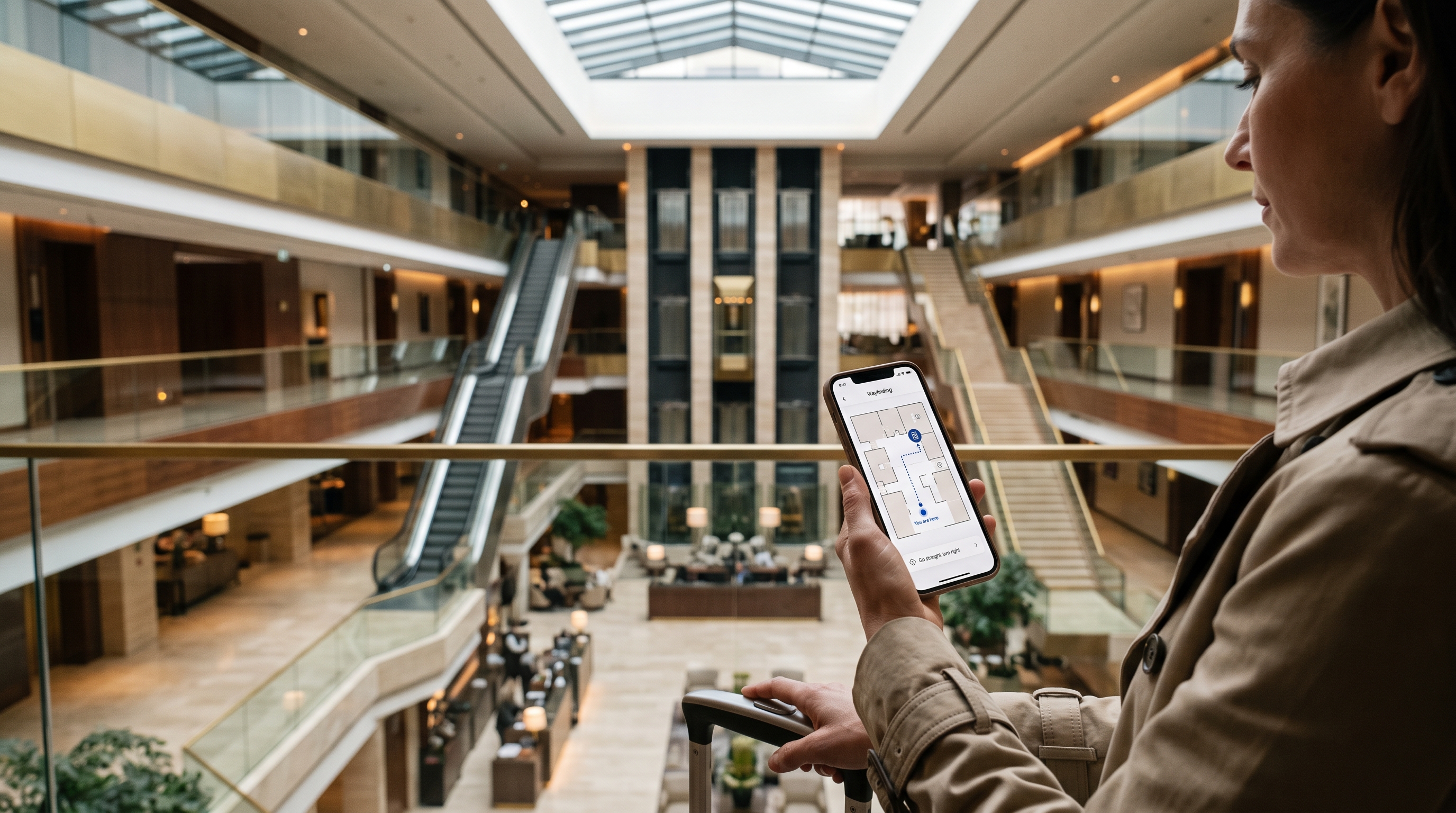
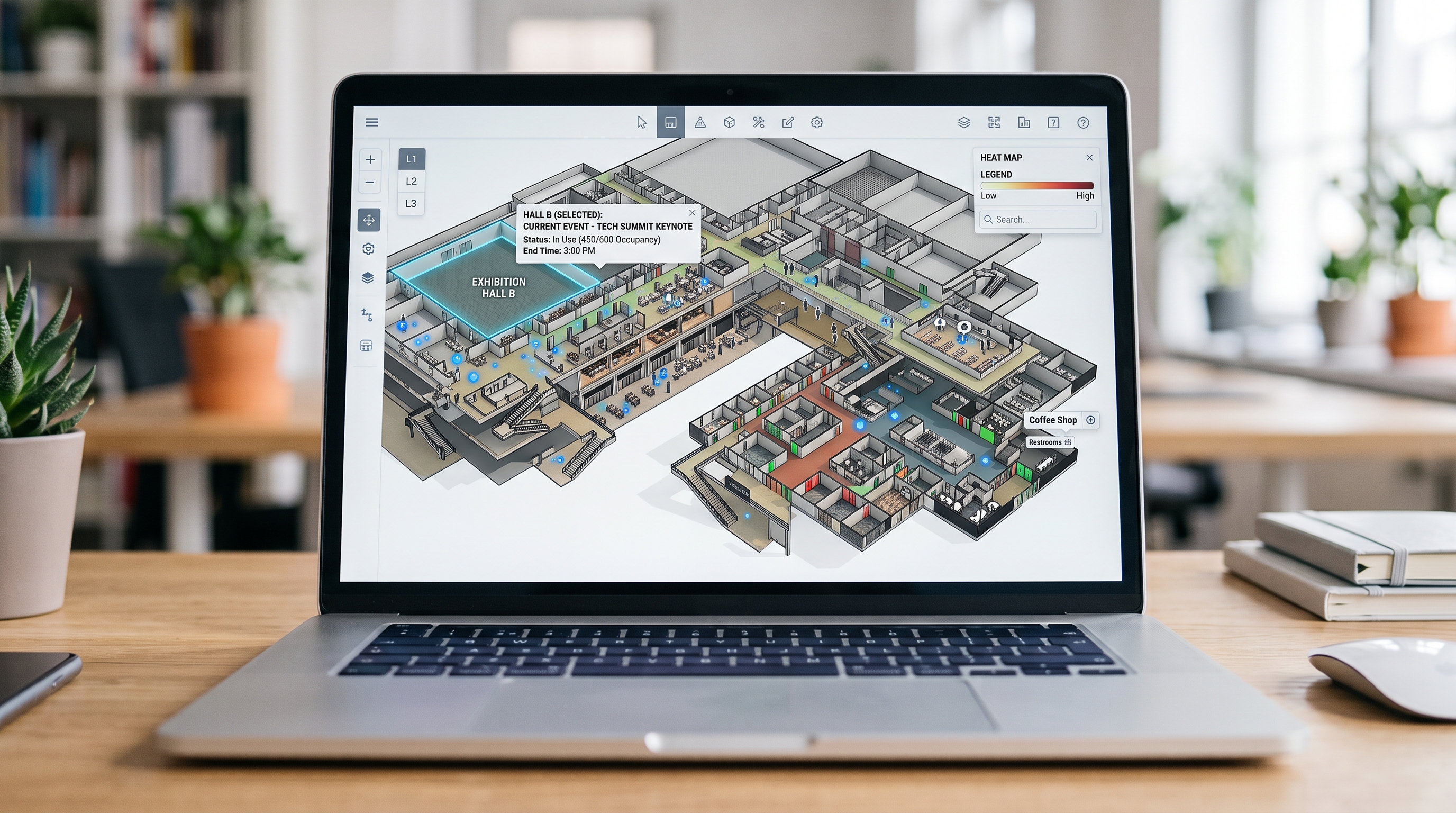
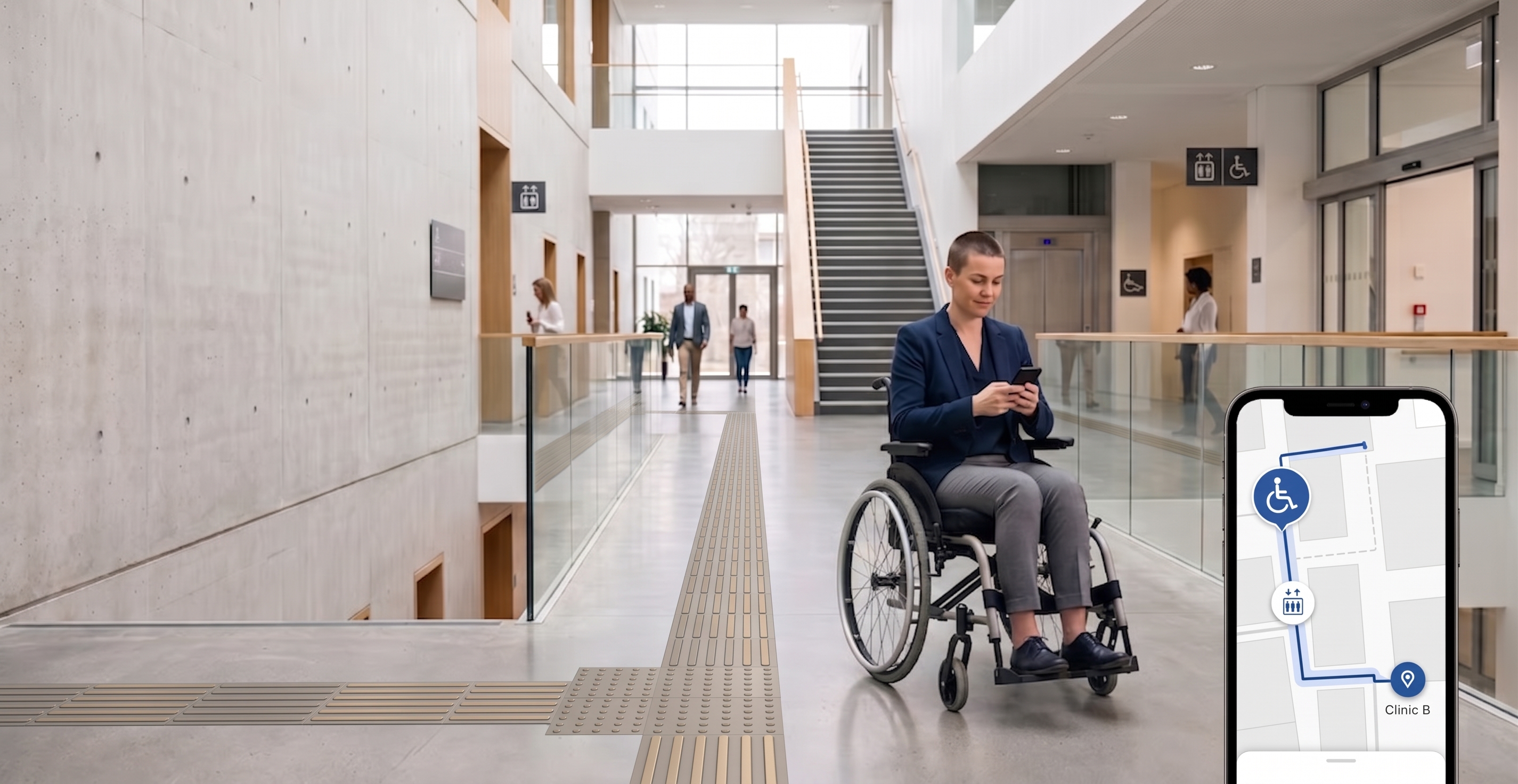
Instead of relying on repeated verbal explanations, venues can provide interactive maps, searchable destinations, step-by-step routing, kiosk guidance, and mobile-friendly web navigation. This allows visitors to find their destination with more confidence and less hesitation.
More importantly, it shifts navigation from a repeated manual task into a scalable digital service.
A well-designed digital wayfinding experience can help visitors:
- find the right entrance before arrival
- search by destination, department, store, clinic, or service
- follow clear routes across complex buildings or campuses
- continue navigation from kiosk to mobile
- reduce uncertainty during the journey
- depend less on staff for basic direction support
This does not replace staff. It protects their time and allows them to focus on the interactions that truly require human attention.
A better experience for both visitors and teams
When venues improve navigation, the benefit is not limited to visitor convenience. It also improves operational flow.
Fewer repeated direction requests can reduce pressure on frontline teams. Visitors move with more confidence. Service points face fewer unnecessary interruptions. And the venue begins to feel more organized, responsive, and easier to use.
This is especially important in environments where visitor experience and operational efficiency are closely linked.
Modern venues invest heavily in design, systems, and services. But if people still need to stop and ask for directions at every stage of the journey, a critical part of the experience remains unresolved.
The bigger takeaway
Giving directions may seem like a small act. But at scale, it reveals a larger problem: the venue is asking people to fill a navigation gap that should be solved by the environment itself.
That is where digital wayfinding plays an important role. Not as a luxury feature, but as practical infrastructure for better visitor flow, stronger service delivery, and smarter use of staff time.
In complex venues, the goal should not be to make staff better at repeating directions.
It should be to make visitors less dependent on asking in the first place.
Featured Success Stories
See how businesses like yours are leveraging Nearmotion to createimpactful indoor experiences.


Send Us a Message
Fill out the form below, and our team will get back to you shortly.





Find Your Perfect Solution
Ready to transform your retail space? NEARMOTION offers tailored solutions. Discuss with an expert or start building your map for free.