
One Map, Two Wins: Visitor Experience and Operations
%20(2).png)
Modern venues are under pressure to do more than look impressive. They need to move people smoothly, reduce confusion, support operations, and stay manageable as they grow.
That is why digital mapping is becoming one of the most practical layers in venue transformation.
In airports, hospitals, universities, malls, and large public facilities, mapping is often treated as a visitor-facing feature. In reality, it does much more. A well-built digital map can improve wayfinding, support facility teams, organize assets, simplify maintenance, and create a clearer view of the entire venue.
Wayfinding Is Only the Beginning
The most visible value of venue mapping is visitor navigation.
People want to find the right entrance, department, gate, classroom, clinic, or service point without stress. When they cannot, the venue feels harder to use than it should. Staff spend more time giving directions. Visitors lose time. The experience becomes frustrating for everyone.
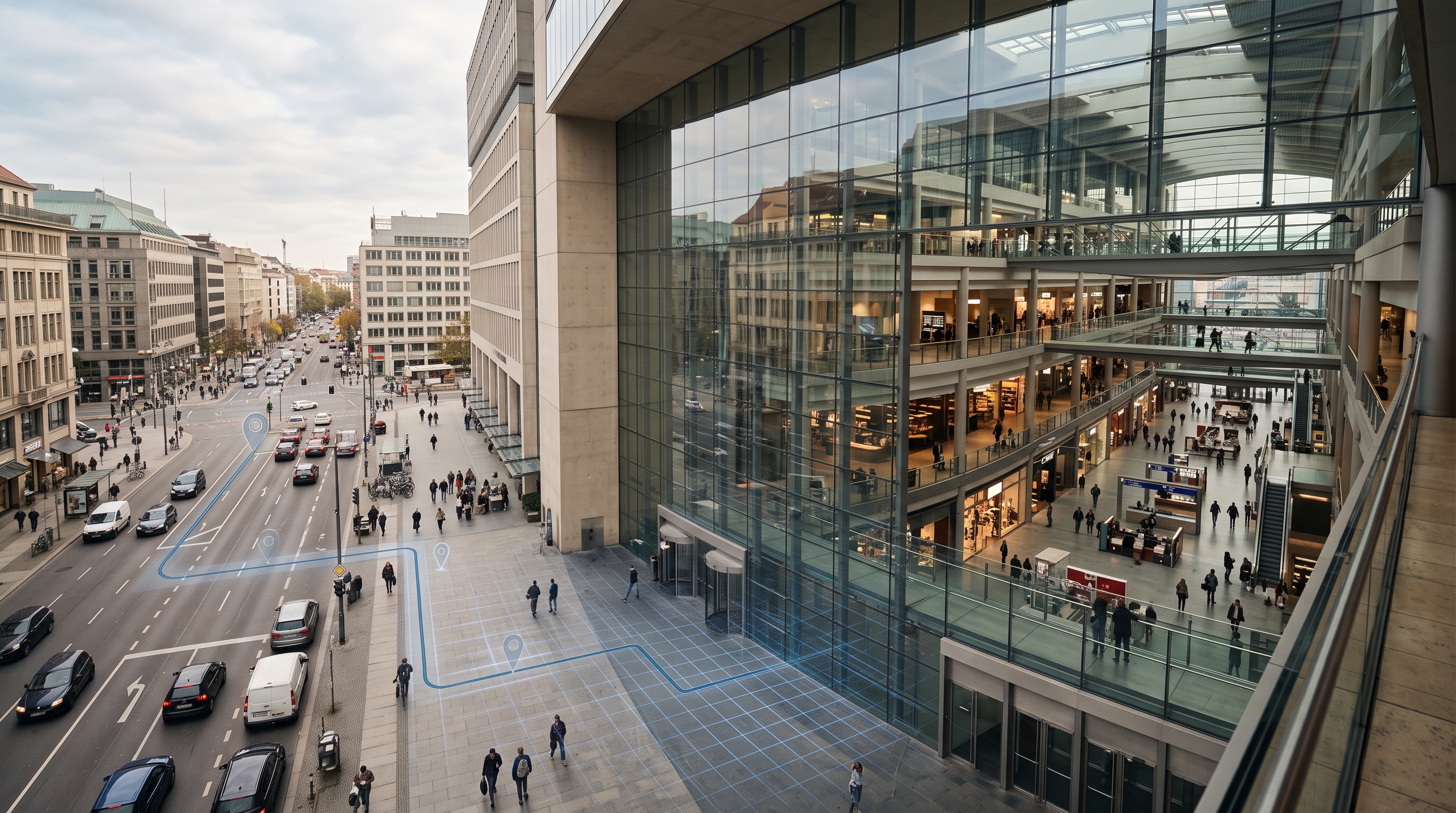
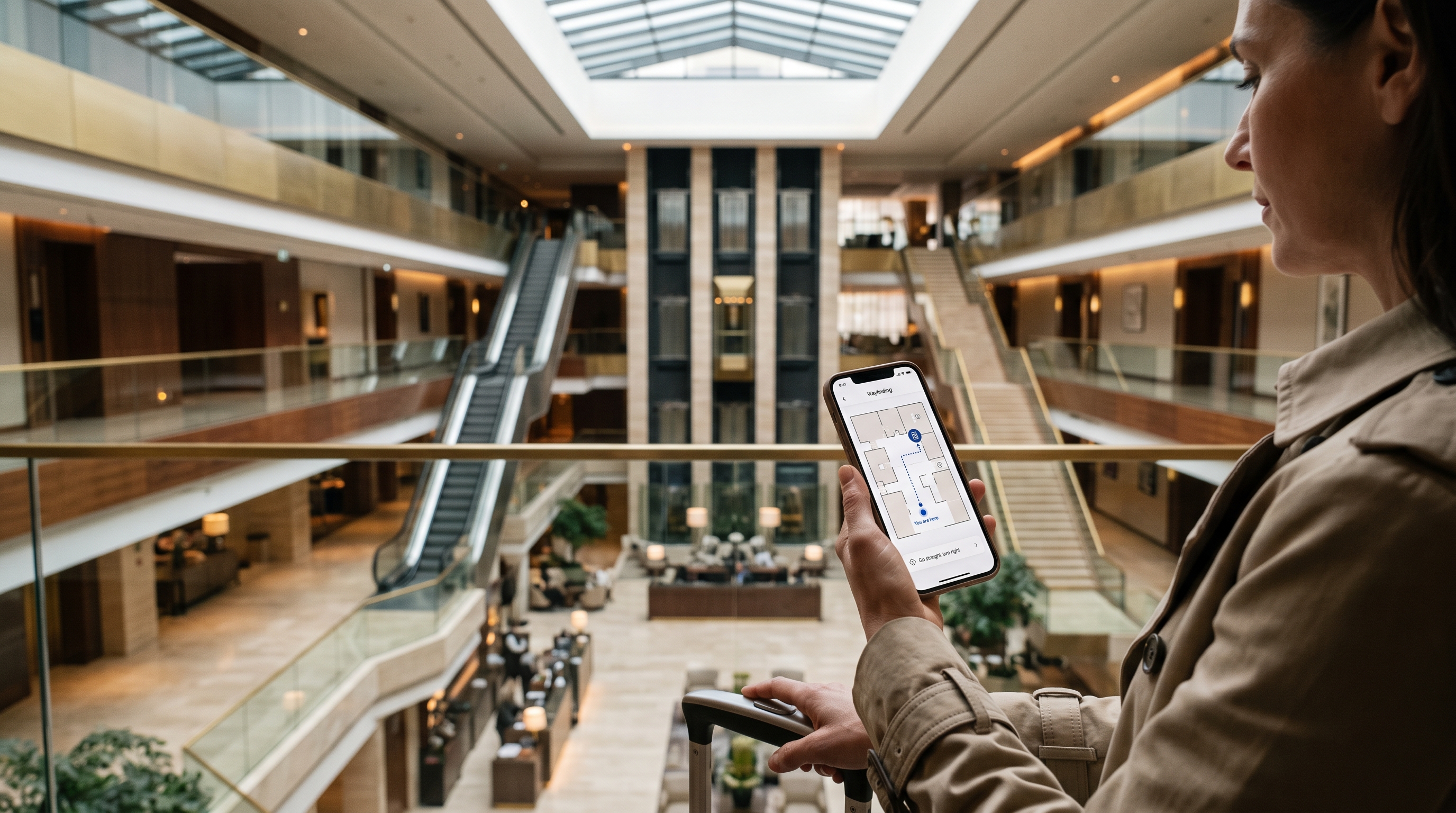
Digital mapping makes movement easier. Through web maps, kiosks, and mobile apps, visitors can search destinations, understand their route, and move with more confidence.
In airports, this reduces pressure during time-sensitive journeys. In hospitals, it helps patients and families reach the right place with less confusion. In universities, it makes large campuses easier to understand for students, staff, and guests.
The Same Map Can Support Operations
What makes digital venue mapping more valuable is that it is not limited to visitor experience.
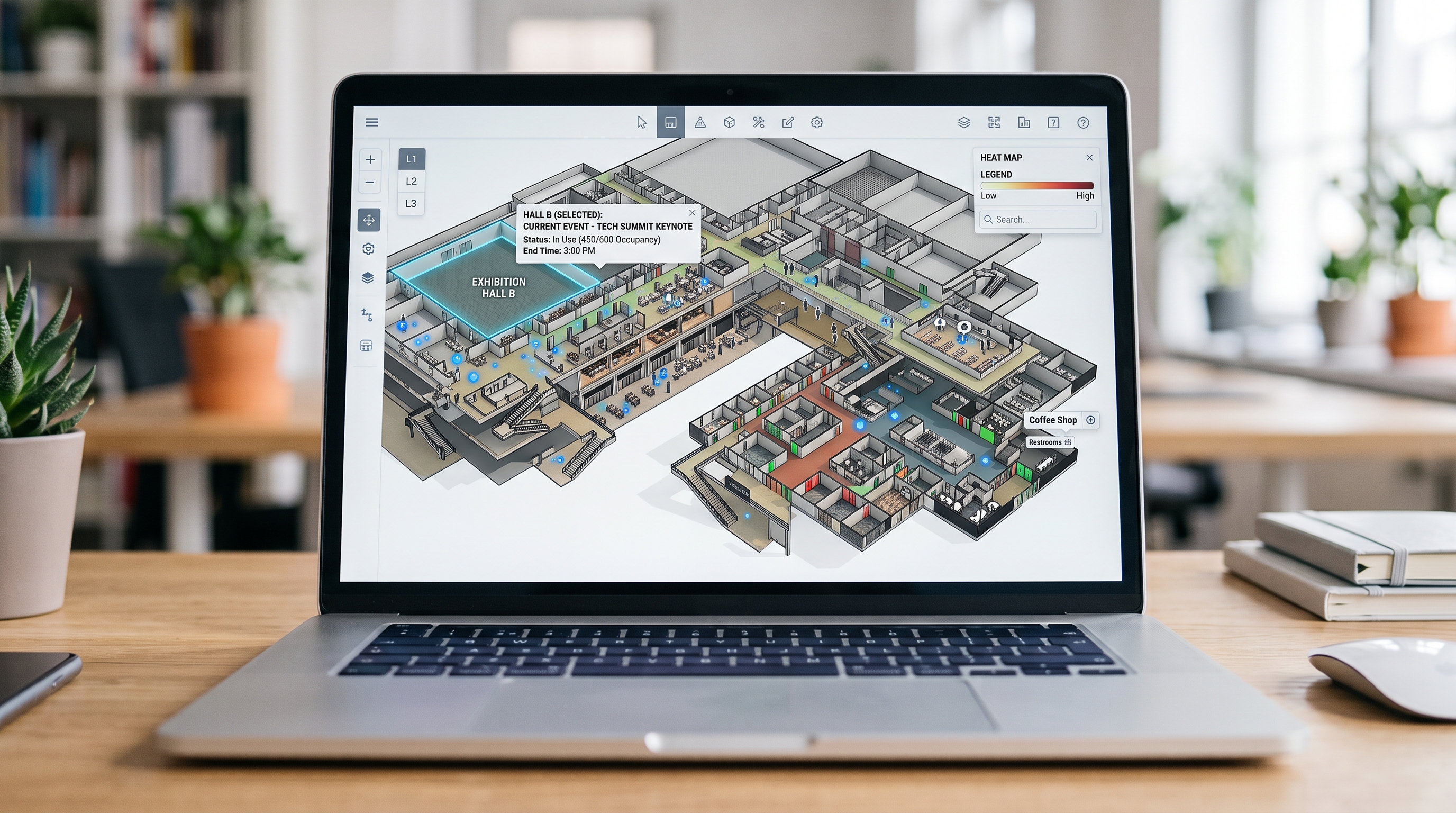
The same map can become a working layer for internal teams. Instead of seeing the venue only as drawings, spreadsheets, or disconnected systems, operators can see spaces, services, and assets in their real context.
This changes how teams manage the venue day to day.
Facility managers can understand locations more clearly. Operations teams can coordinate faster. Service teams can respond with better precision. Decision-making becomes easier when the venue is visible as a digital environment, not just a physical one.
Asset Mapping Creates Better Control
Large venues depend on hundreds or thousands of assets. These may include kiosks, fire safety equipment, electrical rooms, HVAC components, signage points, escalators, doors, counters, sensors, and service infrastructure.
Without mapping, asset records often sit in separate systems with limited spatial context. Teams may know what the asset is, but not always understand its exact position, nearby dependencies, or easiest access route.
Mapping assets into the venue model improves that. It connects each item to a real place. That makes tracking, inspection, planning, and coordination more practical.
This is especially important in complex venues where the physical environment itself affects how work gets done.
Maintenance Becomes Faster and Smarter
Maintenance is not only about fixing issues. It is also about finding them, reaching them, and understanding them quickly.
A digital map helps reduce wasted time before the work even starts. A technician can identify the exact area, see the surrounding context, understand access routes, and locate the related asset more efficiently. Supervisors can also view tasks across the venue in a way that is easier to manage than a static list.
For large environments such as hospitals, airports, and campuses, this matters. Delays in maintenance can affect operations, safety, service continuity, and the visitor experience itself.
Mapping adds clarity to maintenance workflows, and clarity improves response.
Why Static Information Is No Longer Enough
Many venues still rely heavily on static signage, printed directories, and fragmented records. These tools still have a role, but they are no longer enough on their own.
Venues change constantly. Departments move. Rooms are repurposed. Tenants change. Temporary closures happen. New assets are added. Routes are affected by construction or operational changes.
A static system struggles to keep up with a changing environment.
A digital map is easier to update and easier to extend across multiple touchpoints. That is what makes it useful not only for visitors, but also for the teams responsible for keeping the venue clear, efficient, and functional.
Why This Matters Across Sectors
The need is not limited to one industry.
Airports need to support passenger movement while managing large operational environments. Hospitals need to reduce stress for patients while improving internal coordination. Universities need to simplify campus navigation while maintaining a clearer digital view of buildings and facilities. Malls and public venues need to improve discoverability while supporting tenant and service operations.
The use cases may differ, but the logic is the same: the more complex the venue, the more valuable digital mapping becomes.
A Map Is Becoming Part of the Venue’s Infrastructure
The biggest shift is this: a map is no longer just a design layer.
It is becoming part of the venue’s operational infrastructure.
It helps people move. It helps teams manage. It helps assets become visible. It helps maintenance become more structured. And it creates a stronger digital foundation for future services and integrations.
That is why mapping should not be seen as an optional extra.
For modern venues, it is increasingly part of how the place works.
Featured Success Stories
See how businesses like yours are leveraging Nearmotion to createimpactful indoor experiences.


Send Us a Message
Fill out the form below, and our team will get back to you shortly.





Find Your Perfect Solution
Ready to transform your retail space? NEARMOTION offers tailored solutions. Discuss with an expert or start building your map for free.