
Event Mapping: Creating More Value for Exhibitors and Visitors

When people talk about event innovation, they often focus on registration systems, mobile apps, digital screens, or immersive activations. But one of the most important drivers of event value is often overlooked: how people move through the venue.
That movement directly affects two groups at the center of every event: visitors and exhibitors.
For visitors, the experience depends on clarity, ease, and confidence. They need to know where they are, where they need to go, and how long it will take to get there. For exhibitors, value depends on visibility, discoverability, and footfall. They need to be found easily, reached efficiently, and positioned as part of the attendee journey.
This is where event mapping creates real value.
Event mapping is no longer just a digital floorplan. At its best, it becomes an intelligent experience layer that helps visitors navigate more smoothly while helping exhibitors become more visible and accessible. In large events with multiple halls, session rooms, sponsor zones, registration points, and temporary activations, that role becomes even more important.
Better Navigation for Visitors
At exhibitions, conferences, and large public events, visitors are constantly trying to answer practical questions: Where is my next session? How do I reach a specific booth? Which entrance should I use? Where are the food outlets, help desks, or rest areas?
Without clear guidance, even well-designed events can feel harder to navigate than they should be.
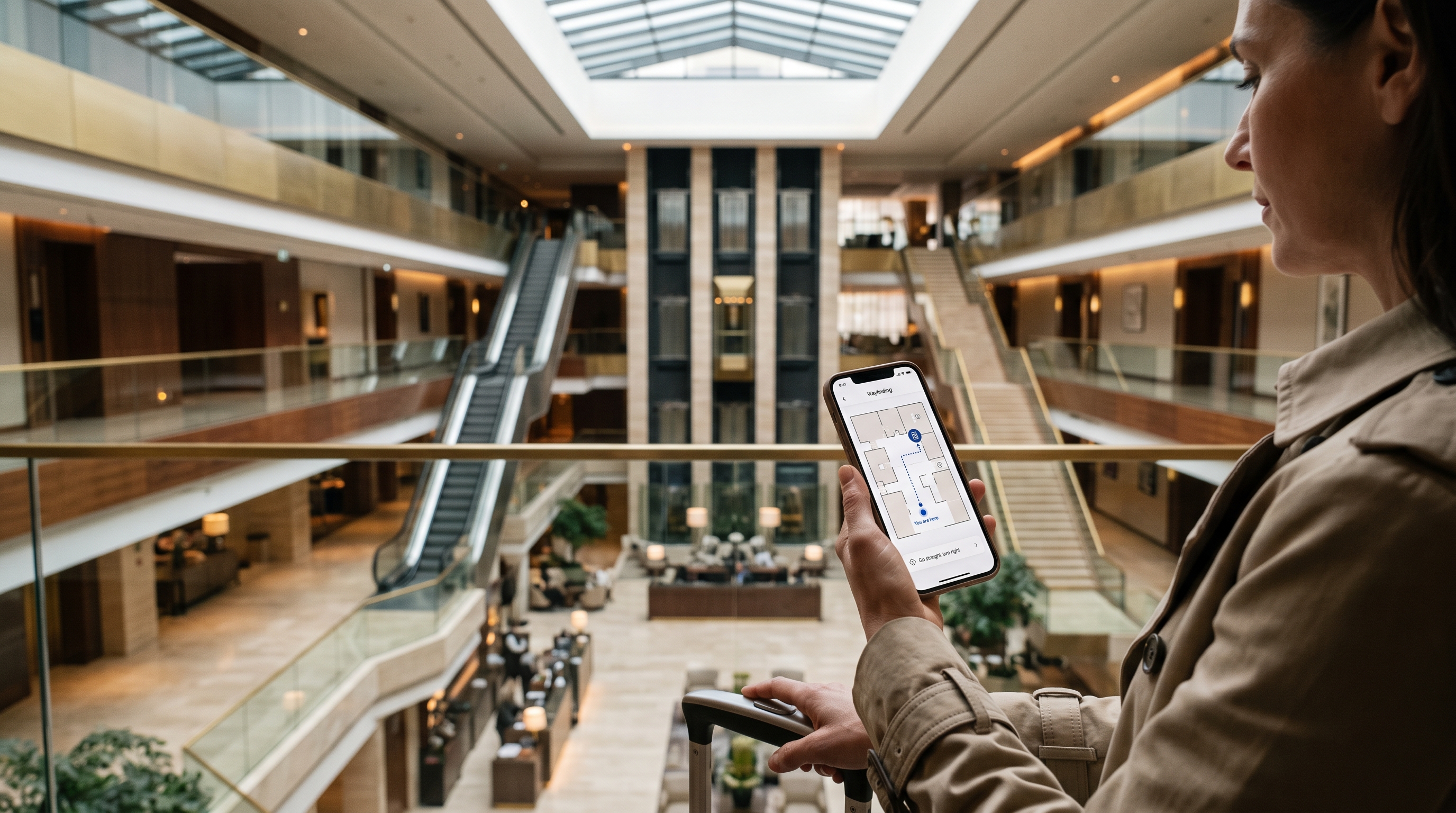
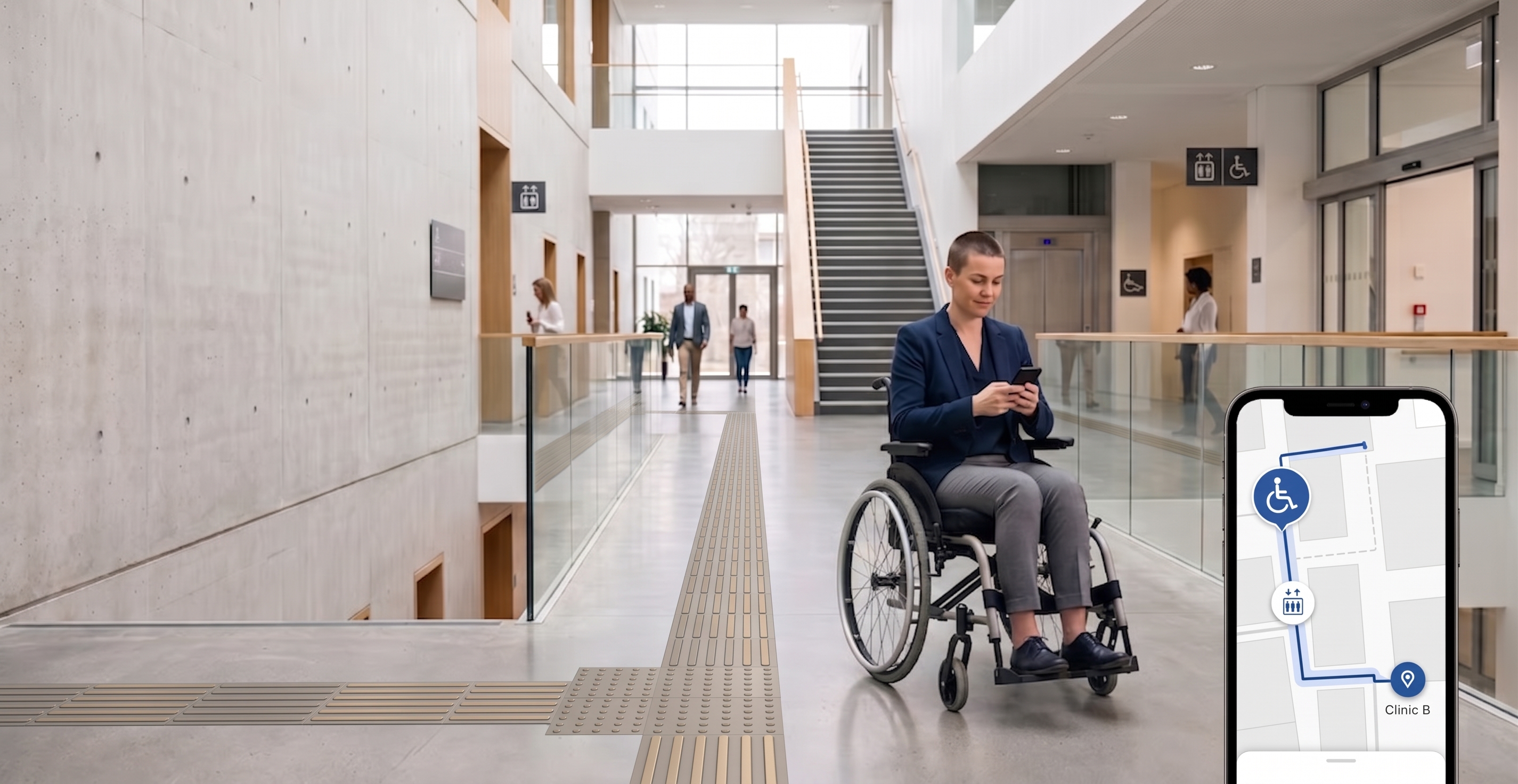
Event mapping reduces that friction. It can provide searchable destinations, step-by-step routing, estimated walking times, accessible paths, and nearby points of interest. Instead of relying only on static signage or asking staff for directions, visitors can move through the venue with greater confidence and less stress.
That matters because navigation shapes perception. A well-mapped event feels more organized, more intuitive, and more respectful of people’s time. It helps visitors spend less time trying to orient themselves and more time engaging with the event itself.
More Visibility for Exhibitors
For exhibitors, event value is closely tied to discoverability. A strong presence is not only about booth design or brand messaging. It is also about whether attendees can find the booth easily and include it naturally in their journey through the venue.
Event mapping helps make that possible.
Through searchable booth listings, branded pins, category filters, and route guidance, exhibitors become easier to locate and easier to reach. Instead of depending only on hall placement or random foot traffic, they gain a stronger digital presence inside the event environment.
This can be especially valuable in large venues where strong exhibitors may still be missed simply because attendees do not know where to find them or how far away they are. Event mapping helps reduce that gap and creates a more direct connection between visitor intent and exhibitor visibility.
A Shared Value Layer Across the Event
One of the strongest advantages of event mapping is that it creates value for both sides at once.
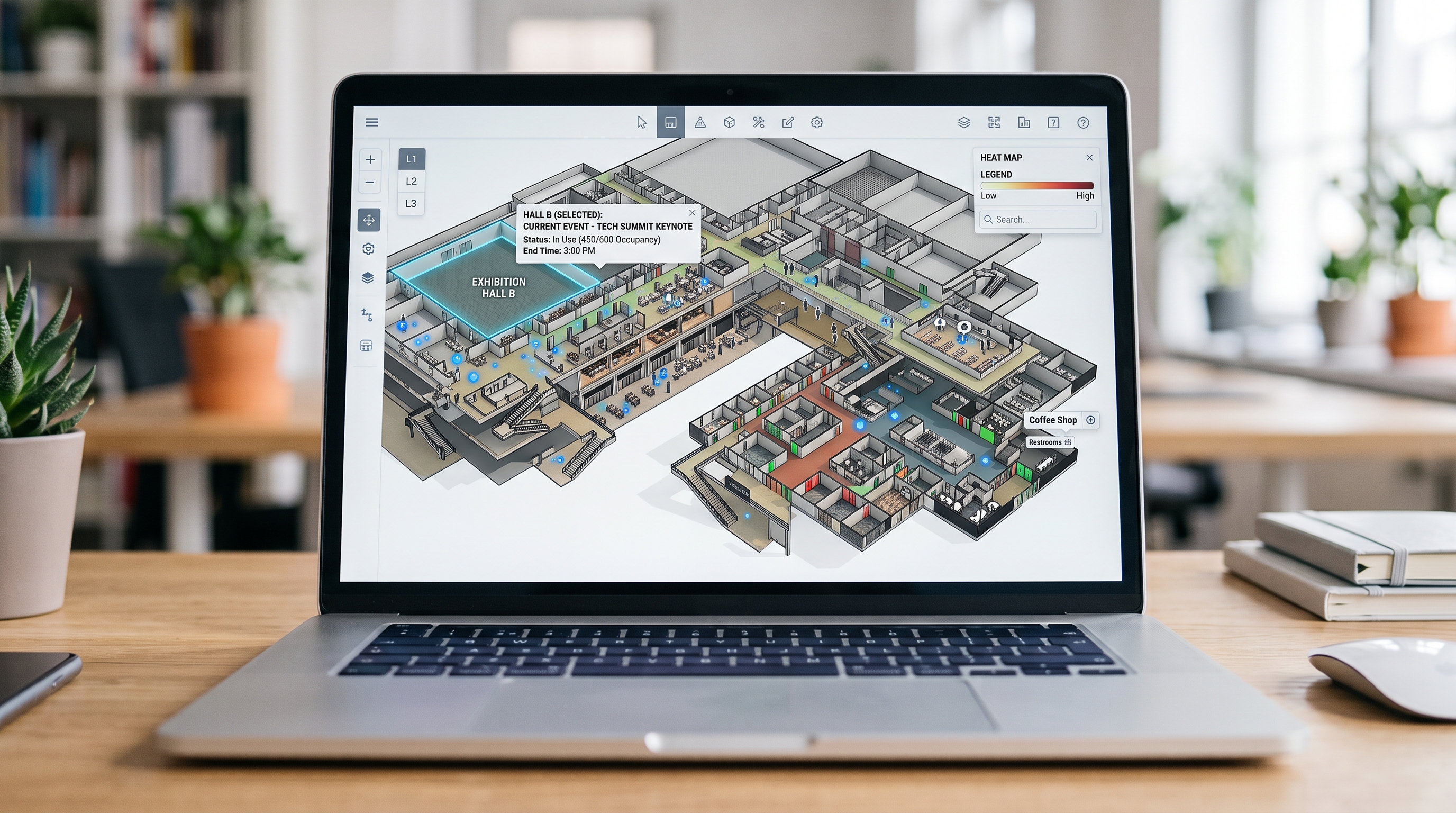
Visitors gain a smoother, more intuitive experience. Exhibitors gain more exposure and better accessibility. Organizers gain a clearer, more consistent way to manage venue information across kiosks, mobile apps, websites, and interactive displays.
That consistency is critical. When venue information differs from one touchpoint to another, trust drops quickly. A unified mapping layer helps ensure that visitors and exhibitors are working from the same spatial reference, with the same live information across the event.
This becomes even more powerful when mapping is connected to schedules, exhibitor directories, notifications, and service information. A map then stops being just a reference tool and starts becoming an active part of the event experience.
Commercial and Operational Benefits
Event mapping also creates measurable commercial value.
For sponsors and exhibitors, map-based visibility can become a stronger engagement tool than passive branding alone. Promoted locations, featured booths, and highlighted destinations can create meaningful visibility at the exact moment when attendees are deciding where to go.
For organizers, mapping can also provide operational benefits behind the scenes. It can reduce repetitive wayfinding questions, support better crowd movement, and offer useful insights into what visitors are searching for and where they may be facing friction.
That makes event mapping valuable not only as a visitor tool, but as part of the broader event strategy.
Conclusion
Event mapping does more than help people find their way. It improves how visitors experience the event and how exhibitors benefit from it.
For visitors, it creates clarity, saves time, and reduces stress. For exhibitors, it increases discoverability, strengthens presence, and supports better engagement. For organizers, it brings these two outcomes together in one shared experience layer.
In that sense, event mapping is not just a convenience feature. It is a practical tool for creating more value across the entire event ecosystem.
Because when visitors move better, exhibitors perform better, and the event itself becomes stronger.
Featured Success Stories
See how businesses like yours are leveraging Nearmotion to createimpactful indoor experiences.


Send Us a Message
Fill out the form below, and our team will get back to you shortly.





Find Your Perfect Solution
Ready to transform your retail space? NEARMOTION offers tailored solutions. Discuss with an expert or start building your map for free.