
Digital Wayfinding for Accessibility: Making Navigation More Inclusive
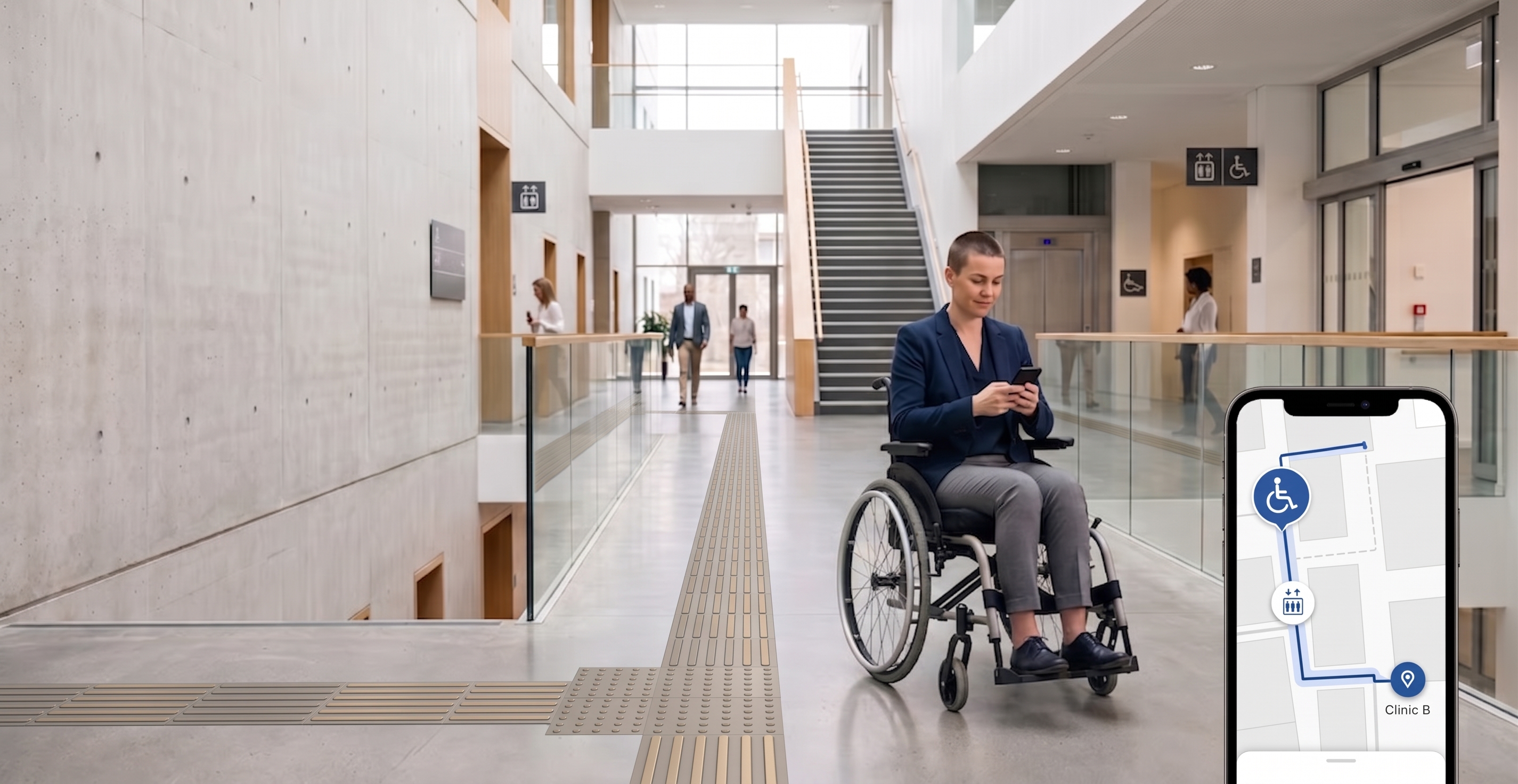
Navigating a large hospital, university, airport, or public facility can be challenging, especially for people with disabilities or limited mobility. Finding an accessible entrance, elevator, ramp, or suitable route can add unnecessary stress to an already unfamiliar journey.
Digital wayfinding for accessibility helps address these challenges by providing users with clear, accessible routes based on the physical characteristics of the environment.
Beyond Finding the Shortest Route
Traditional navigation focuses mainly on getting users from point A to point B. Accessible navigation requires more consideration.
The shortest route may include stairs, narrow corridors, or inaccessible entrances. An accessible digital wayfinding system can instead identify routes that avoid these barriers and prioritize suitable facilities such as elevators, ramps, and accessible entrances.
For example, a wheelchair user looking for a department inside a hospital can receive a route that avoids stairs and guides them through accessible corridors and elevators.
Real-Time Indoor Navigation
Large buildings can be difficult to navigate because GPS does not provide the accuracy required for detailed indoor navigation.
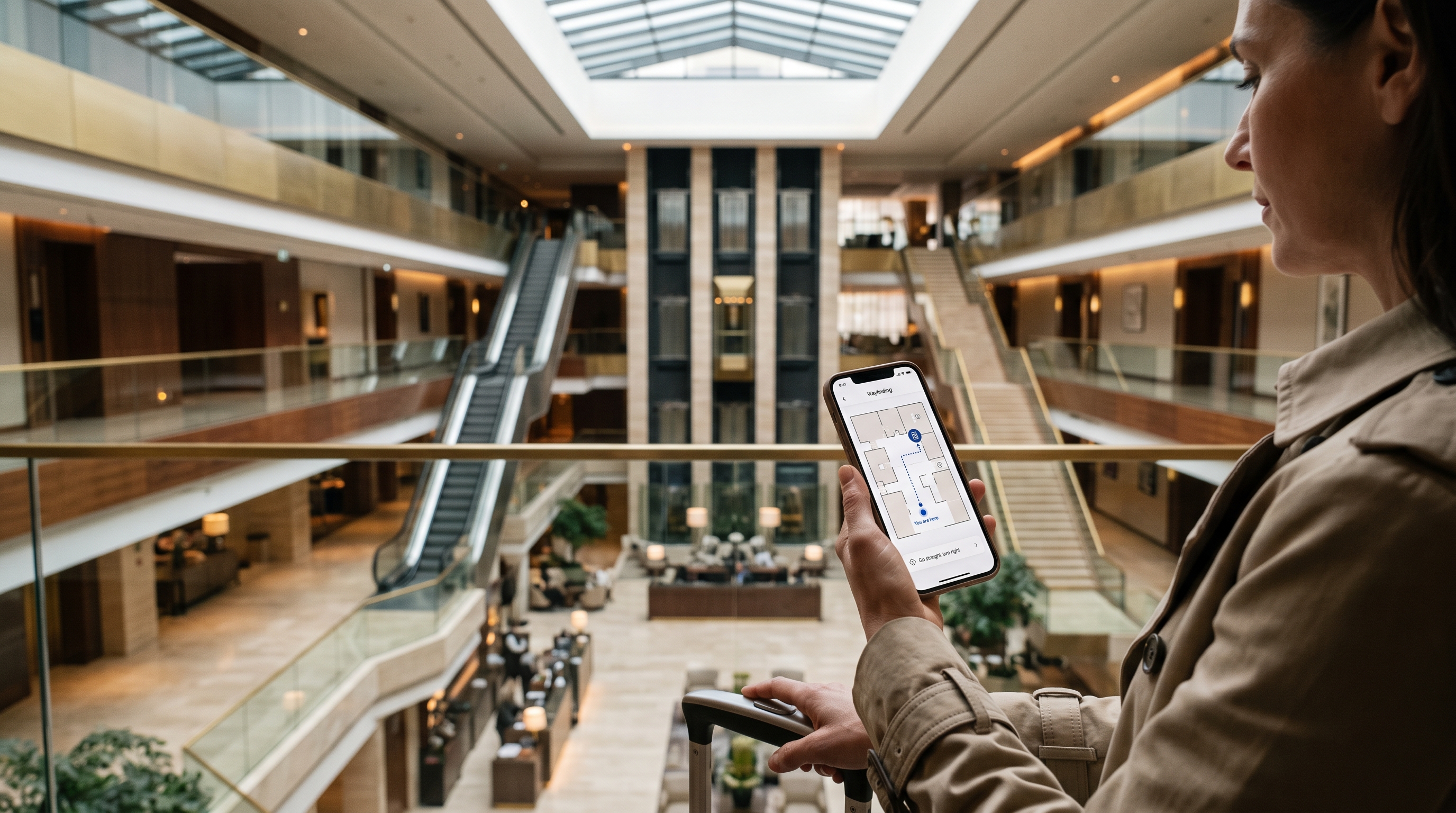
Indoor positioning technologies, such as Bluetooth Low Energy (BLE) and Wi-Fi-based positioning, can help users determine their location inside a building. When integrated with digital maps, users can see their position and receive step-by-step directions.
This can make navigation easier for visitors who may otherwise need to rely on signs, staff, or other people for assistance.
Visual and Audio Guidance
Accessibility also means providing information in different ways.
Digital wayfinding can provide clear visual directions, readable labels, directional arrows, floor information, and high-contrast map elements. Audio navigation can provide spoken instructions, allowing users to follow directions without continuously looking at their screens.
Providing multiple guidance methods allows users to interact with navigation in a way that better suits their needs.
Accessibility Starts With Accurate Map Data
An accessible navigation experience depends on more than the map interface. The underlying map needs to contain relevant accessibility information.
This can include:
- Accessible entrances
- Elevators and ramps
- Accessible parking
- Accessible toilets
- Wheelchair-accessible pathways
- Stairs and escalators
- Temporary closures or restricted areas
Keeping this information updated is equally important. If an elevator or corridor becomes unavailable, the navigation system should be able to provide an alternative route.
Creating More Inclusive Experiences
Digital wayfinding can support accessibility before visitors even arrive. Users can identify accessible parking, entrances, facilities, and routes in advance, helping them plan their journey with greater confidence.
For hospitals, universities, airports, government buildings, and other complex facilities, accessible digital wayfinding can become an important part of the overall visitor experience.
The goal is not simply to show people where to go, but to help them understand how they can get there safely and independently.
By combining accurate digital maps, accessible routing, indoor positioning, and visual and audio guidance, organizations can create more inclusive environments where navigation is easier and more accessible for everyone.
Featured Success Stories
See how businesses like yours are leveraging Nearmotion to createimpactful indoor experiences.


Send Us a Message
Fill out the form below, and our team will get back to you shortly.





Find Your Perfect Solution
Ready to transform your retail space? NEARMOTION offers tailored solutions. Discuss with an expert or start building your map for free.